Case Study · Chase for Business — Digital Customer Experience (DCE)
Building the front door — and the practice behind it
The director of Chase for Business hired me into the DCE design team as an Assistant Design Director to improve how the work ran — intake, scoping, estimation, prioritization, project plans, and capacity planning — in an era when online banking barely existed and design process was still being invented. I did that, took on design and strategy too, and after a few successful deliverables grew into Head of UX for Merchant Services — my own line of business, with a team to lead. This is where both halves of what I do today began: the products I designed and built, and the operating practice I’ve run ever since.
At the time
No online banking to copy — everything built 0-to-1, when it was still early for a bank to invest heavily in digital. “Design ops” and “design systems” were barely terms. I was in the mess of it, wearing many hats.
What I know now
The administrative tasks I almost turned down became half my career. Doing them, over and over, is how I built my instinct for scaling teams, estimation and capacity planning, and design strategy — processes I learned and defined from real problems, not from a playbook.
At a glance
Role (and how it changed)
Assistant Design Director, DCE — hired to improve CBO’s process (intake, scoping, estimation, capacity planning); took on design & strategy; after three deliverables, grew into Head of UX for Merchant Services, with a team
Era & team
Early digital transformation, built 0-to-1. I was part of the DCE design management as the org scaled rapidly across business, mobile & consumer — growing my own scope within it, not scaling the org myself
Skills
Program & delivery management · information architecture · content strategy · front-end build · design systems · accessibility
Roots
Three hats, from the start
I was hired as a UX designer. I insisted on building the front end, then got Scrum-certified to run delivery. Design, build, deliver — three hats I have worn ever since.
Hat 1
Design
UX & information architecture
Hat 2
Build
Front-end development
Hat 3
Deliver
Scrum · delivery & program management
The three first came together years earlier at Ropes & Gray, on infoNet — a firm-wide intranet redesign. I had to work with a wide range of stakeholders — SMEs, lawyers, and their support staff — and organize the communications and data each group needed daily into one manageable, hierarchical application. Serving all those competing groups through a single app was, years early, the same challenge as wrangling lines of business at Chase. The full platform story — IA, card sorting, template rendering — lives in the deep dive.
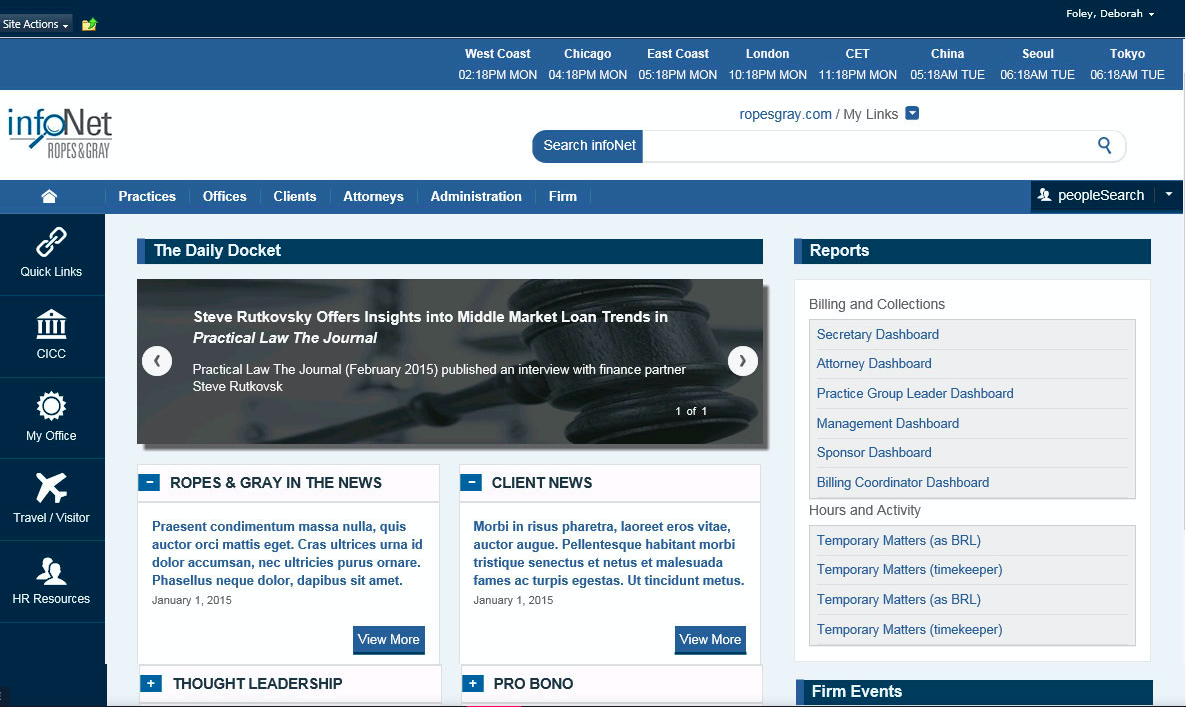 infoNet — the platform rootsOpen the deep dive →
The role I was actually hired into
Hired to fix the process — it made me a hybrid leader
The director of Chase Business hired me to improve how design work ran — intake, scoping, estimation, prioritization, project plans, and capacity planning. My scrum background was the draw, and the Assistant Design Director title reflected it. I accepted it as a UX design role — and didn’t realize how much would be administrative process work rather than the design-strategy leadership I thought I’d signed up for — so I pushed to do both: first IC design, then strategy.
After a run of successful deliverables — and once I’d made clear that this process work (today’s “design ops”) was only part of what I wanted — I took on integrating Merchant Services into Chase Business Online, and grew into Head of UX for that line of business, with a team — and my scope grew from there as the org itself grew into more domains. It set the shape of most of my career since: a hybrid leader of both design management and program management, rather than one or the other.
From building pages myself to leading multiple domains — the path at a glance:
Ropes & Gray
Scrum master + UX of one
Ran the disciplines myself; built the front end
Goldman Sachs
Rebuild lead
Sprints, estimation, Visual QA; components & code-level accessibility
Chase · CBO
Assistant Design Director
Built the process; IC design; the first dashboard
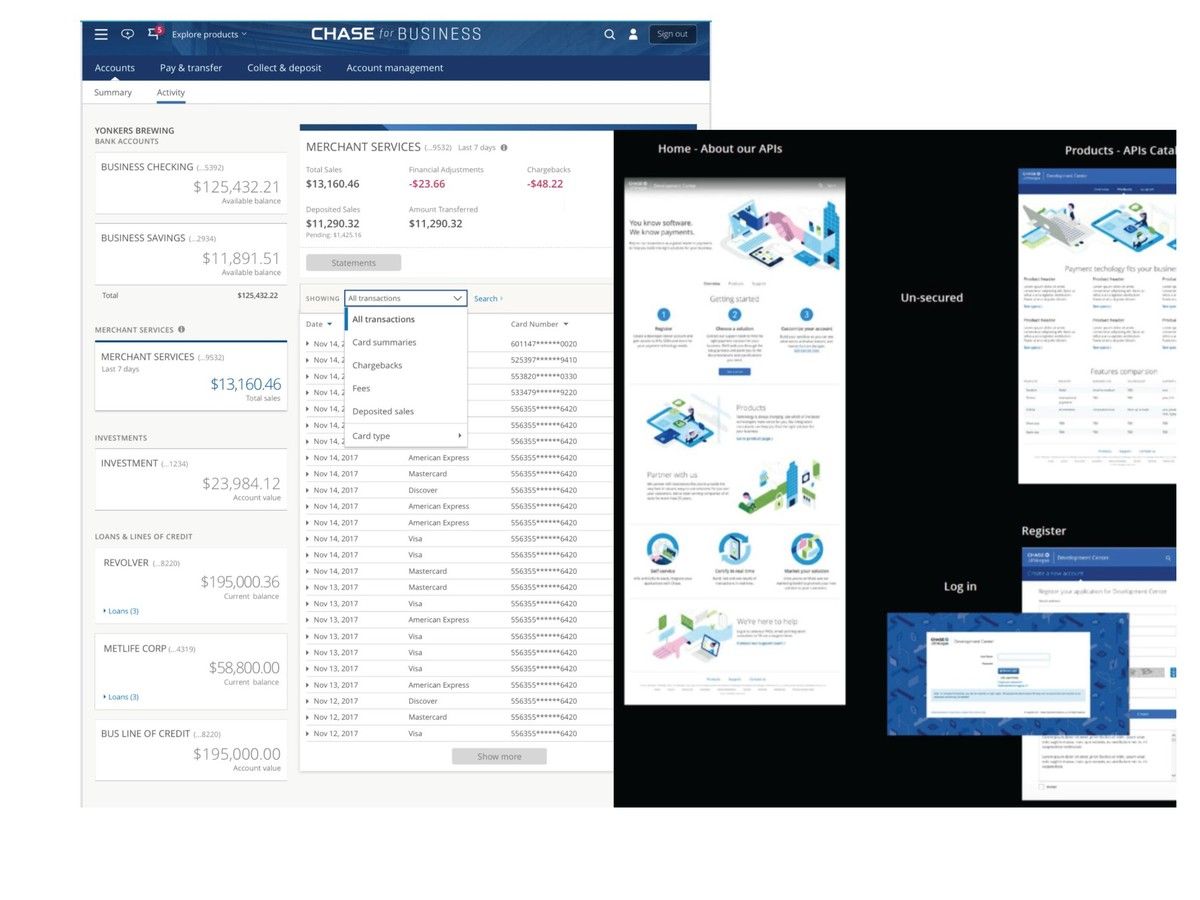
Chase · Merchant Services
Head of UX
My own line of business — the MS Dev Center & mobile
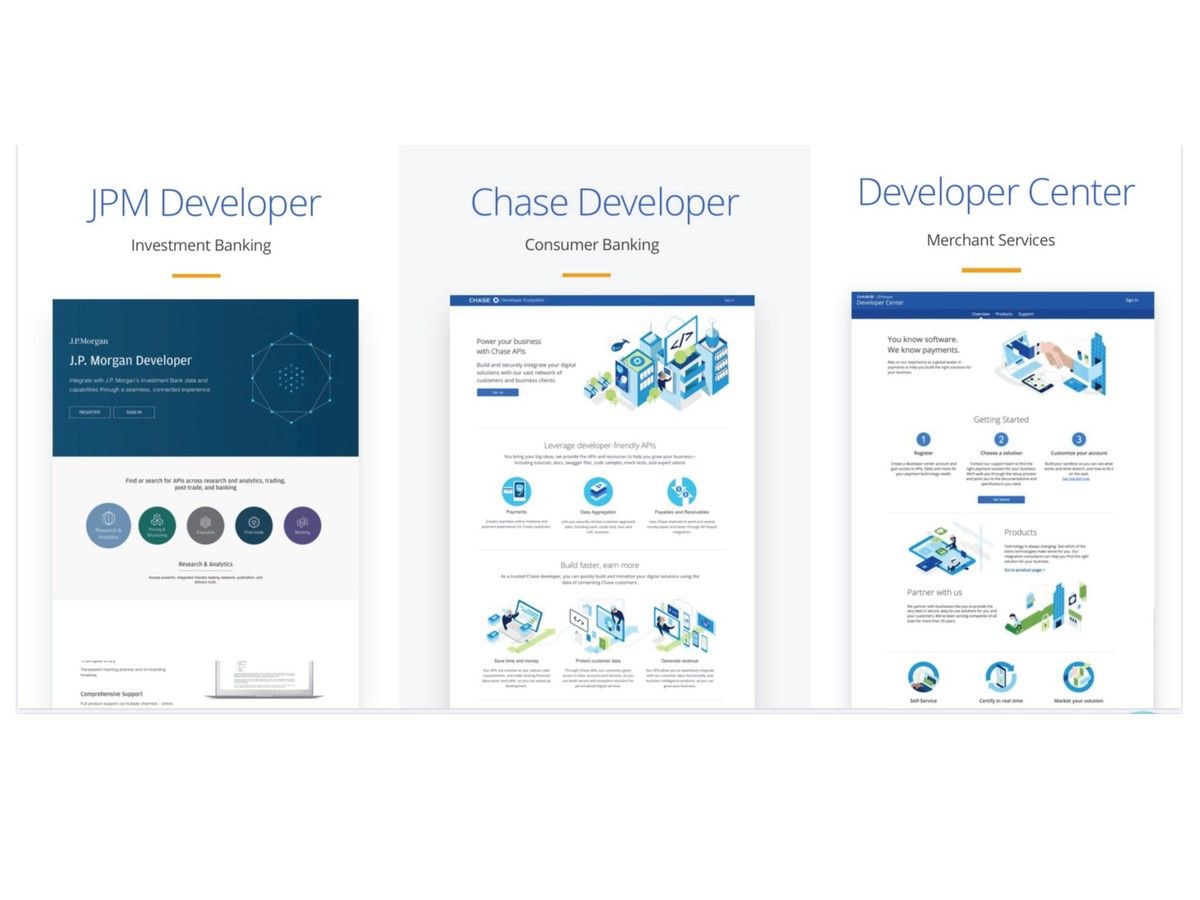
Chase · API Portals
Tribe lead
The “one API store” strategy
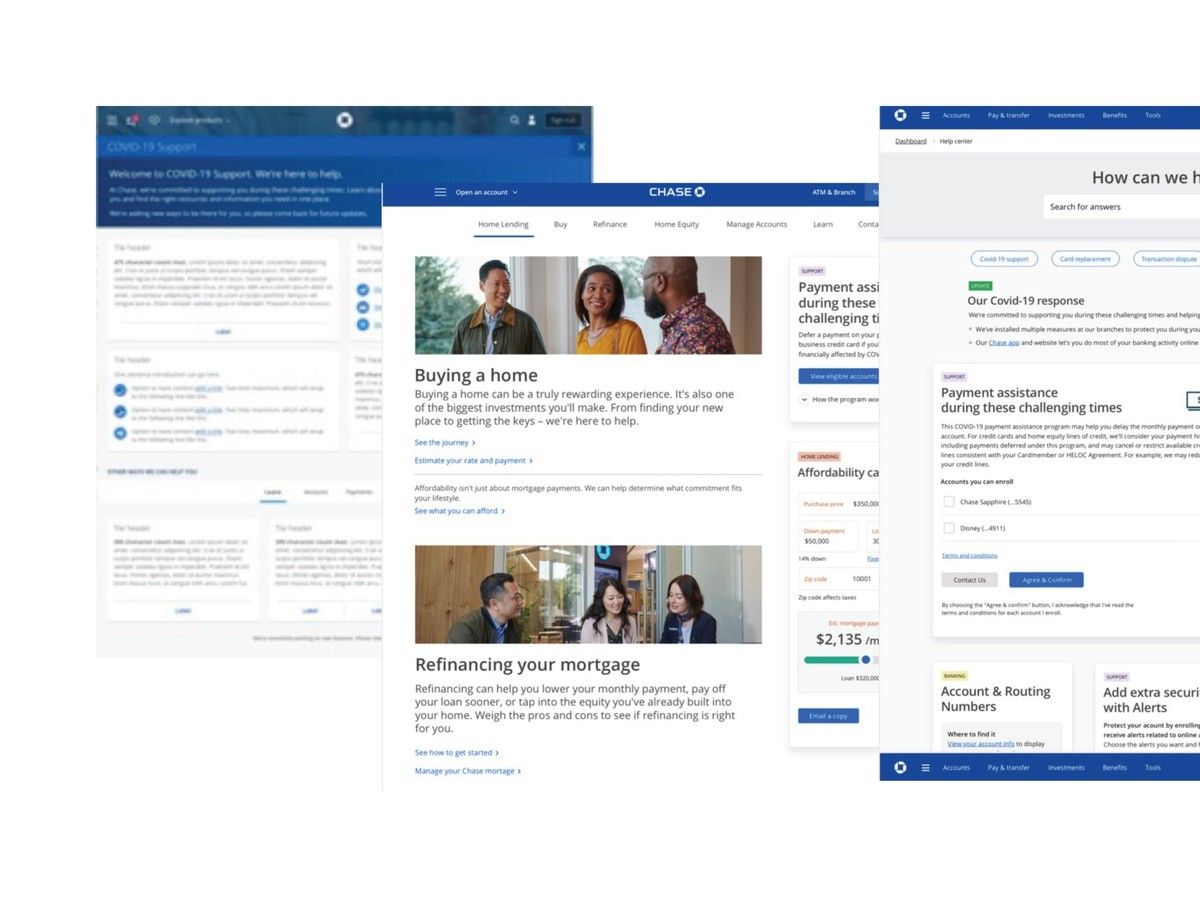
Chase · Digital Channels
Horizontal lead
Dev Portal foundation + cross-LOB governance
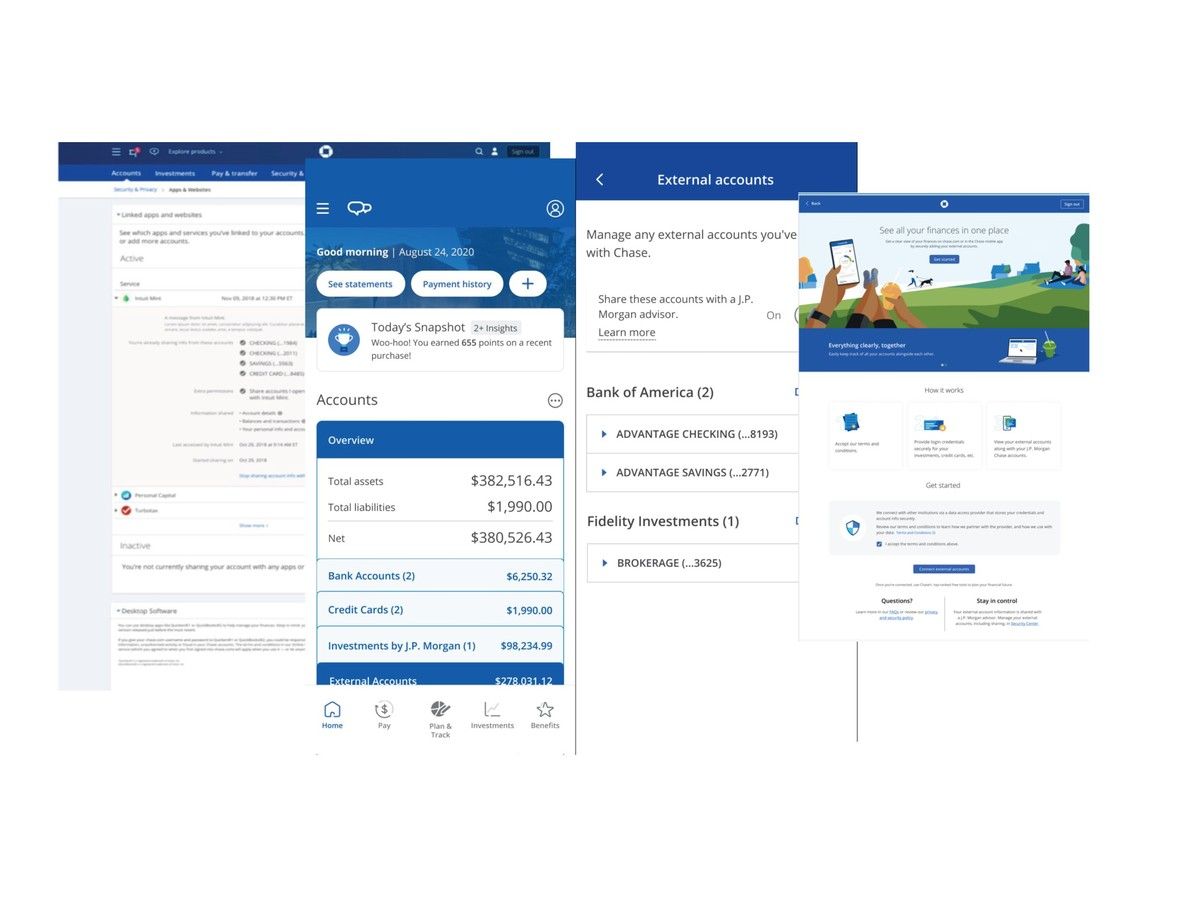
Chase · Connected Banking
Head of UX, multi-domain
Partnered with the Managing Director
The titles say “lead.” The work was management — design strategy and people leadership across multiple teams and domains. It’s built on the hands-on craft I started with, and on the operating processes I learned, defined, and refined from real problems along the way.
Part 1 · The practice I was hired to run
Program management — the gap the director most needed filled
Running the program and process was the gap the director most needed filled — though he hired me for my UX experience too. Intake, scoping, estimation, prioritization, project plans, and capacity planning, on a scrum and agile foundation and a belief that even design can be agile: it felt administrative at the time, but it was really the start of the operating practice I run today.
Lessons from establishing it here
This wasn’t applying a known playbook — it was building one in place. The group were business analysts who wrote banking requirements, not software-delivery specialists, inside a bank that had just gone from almost no digital footprint to digital driving real revenue — and a rush to build. Introducing intake, estimation, and agile meant teaching the discipline, not just running it.
So I didn’t impose it. I introduced each piece as the pain showed — the lesson I’d learned watching my first startup’s CTO roll out agile one method at a time — which is how a skeptical group came to adopt a way of working they’d resisted on day one.
What I set up for Chase Business
In that first part of the year — before “design ops” was a role — this is the concrete work I put in place for the group:
01
Intake
A front door for design requests, so demand was visible and could be prioritized.
02
Scoping
User-mapping exercises with the product partner — at the time often the business analysts who owned requirements, as product ownership was just emerging as a role — to lay out the potential flows and see how many pages and interactions the work really is, before committing.
03
T-shirt sizing & estimation
Sizing work XS–XXL to set timelines we could actually hit.
04
Capacity planning
Matching the work to the team I had — what’s above the line we can deliver, and what falls below it and needs more headcount.
05
Project plans
Sprint-shaped plans designers could commit to — including my 8-week delivery approach.
06
Priority planning
Deciding what got done, what waited, and making the trade-offs visible.
Continue → the full practice
How I run design
The operating practice this chapter started — scoping, sizing, capacity, phasing, and the partner deck — built out in full in Design Leadership & Delivery.
See how I run design →Part 2 · The craft, in brief
Tested as an IC and strategist — then grew into Head of UX, Merchant Services
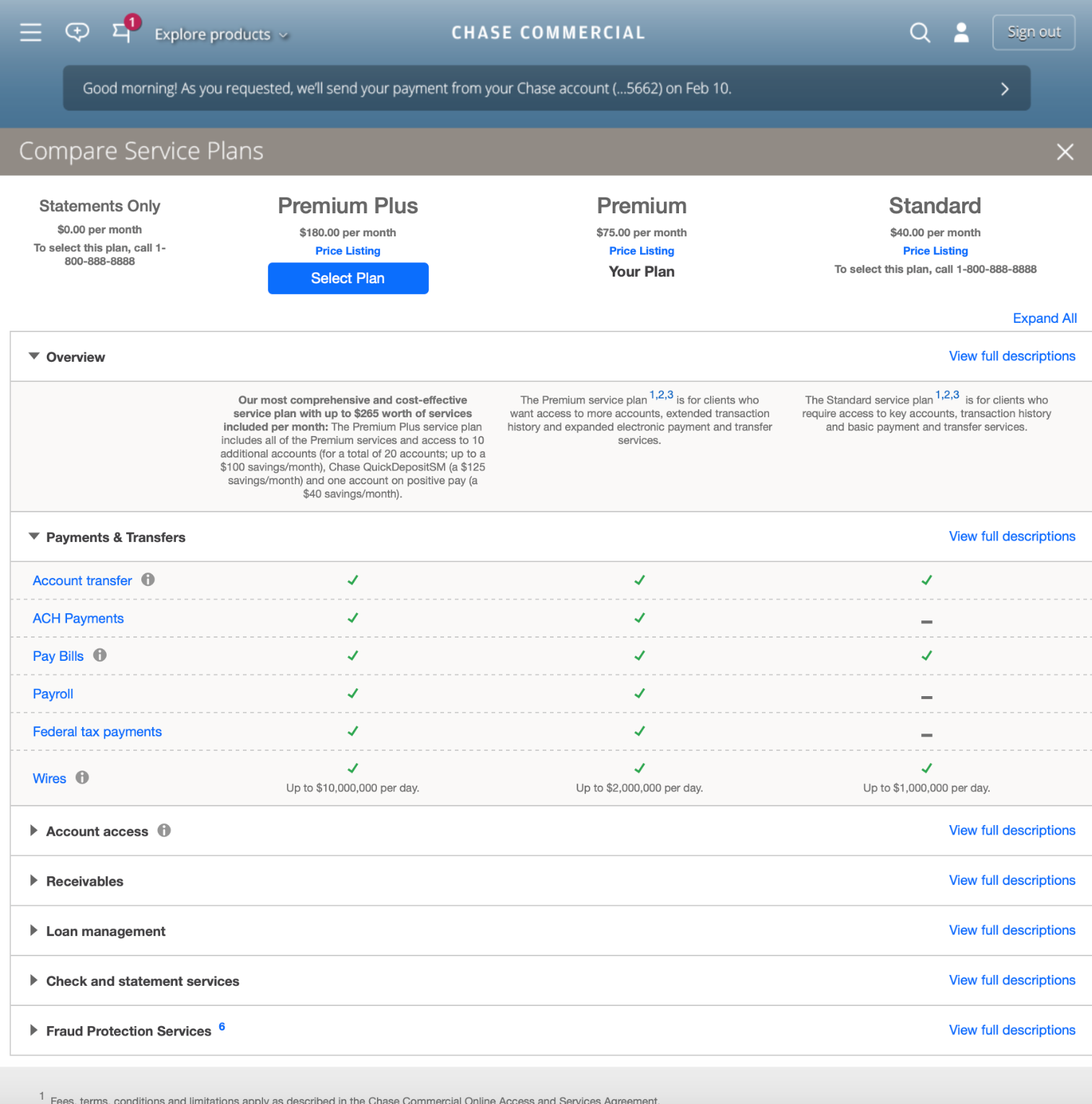
The practice earned trust; the craft is what I was tested on. My first deliverable was a service-plan redesign — a dense pricing-and-features comparison made scannable with progressive disclosure — and I built it myself in clean front-end code.
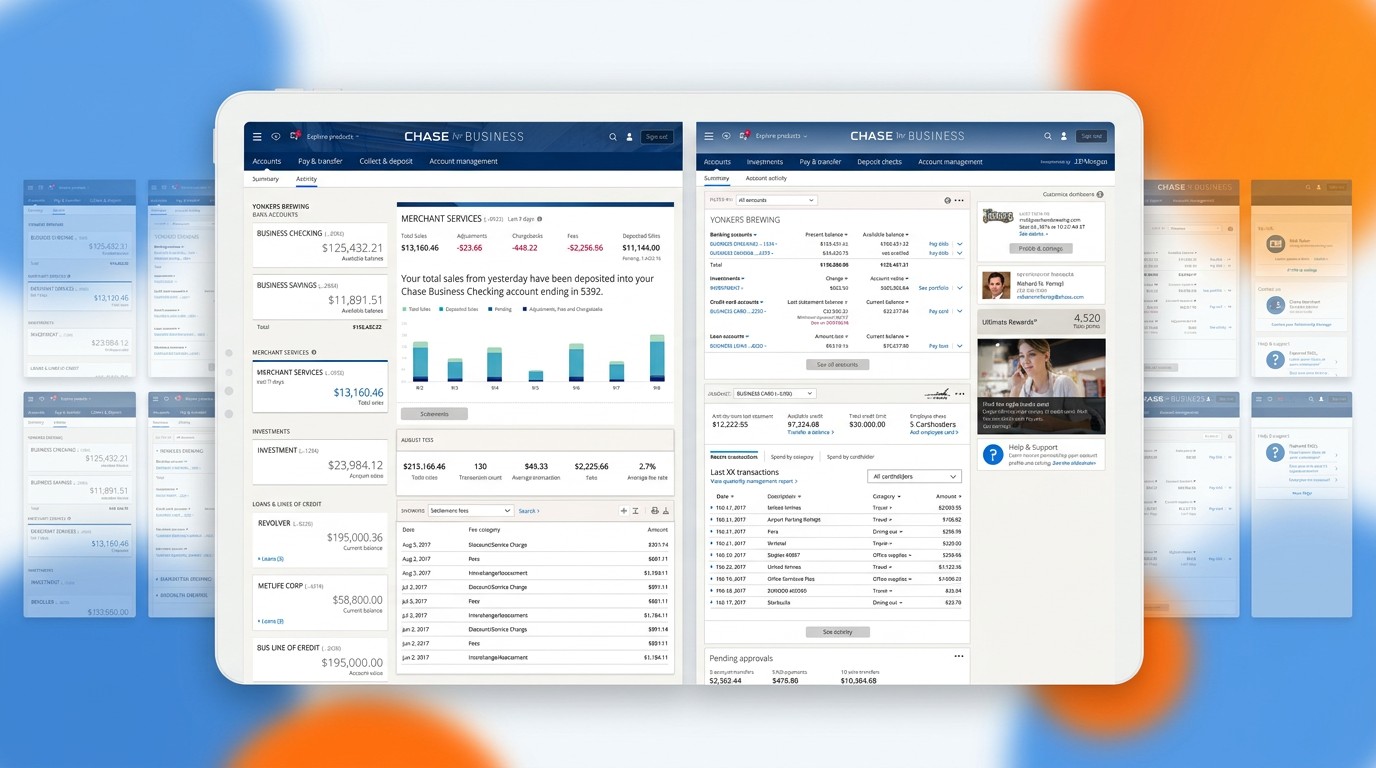
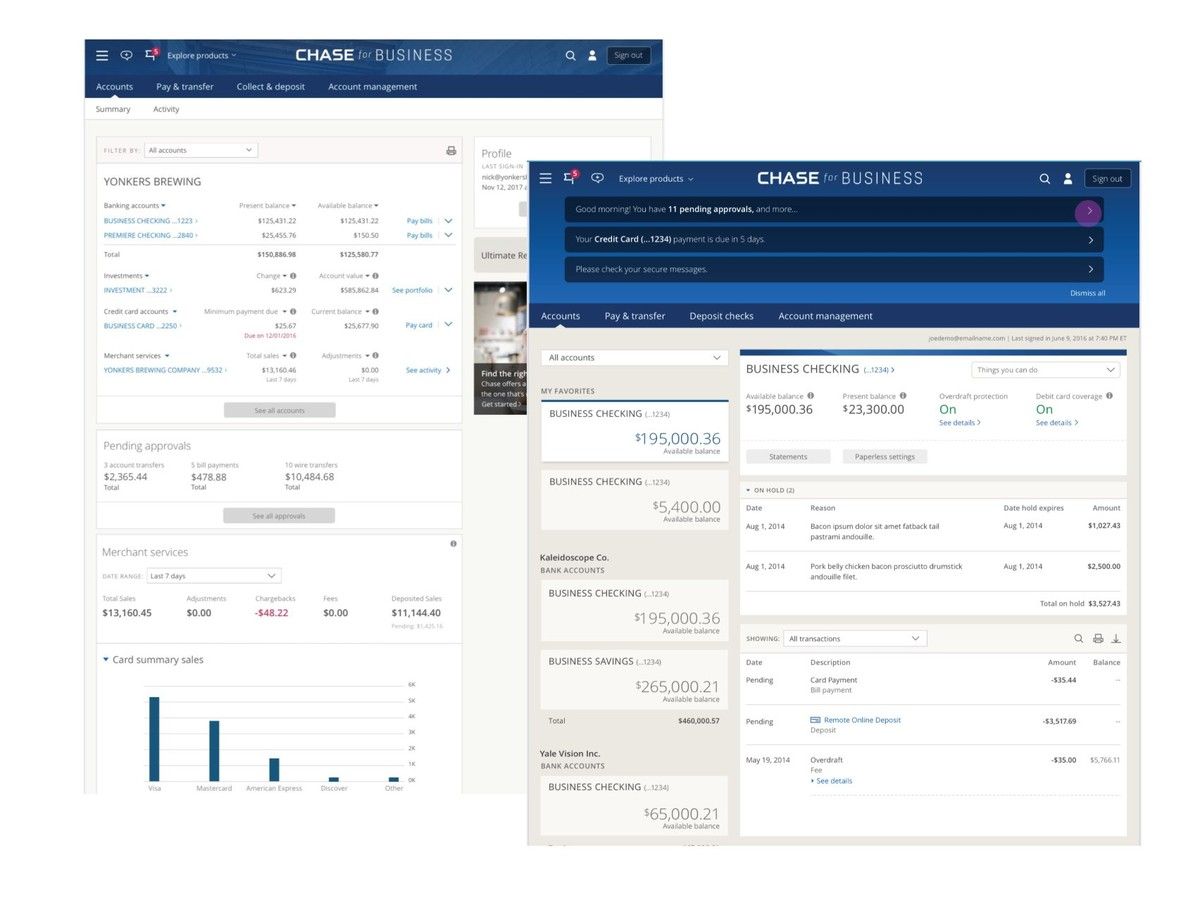
Then the first homepage dashboard — really a content-strategy and information-architecture problem. Every feature, widget, and ingress became a card we organized, tested, and debated with the LOBs; user testing settled the hierarchy into a system (a main column of the data customers come for, a right column of business real estate still useful to them).
Alongside this I took on leading design systems for my Business team — auditing the application for where patterns weren’t serving business users, and becoming the team’s go-to for systems and accessibility (one of a select few trained to review and approve it across Chase Business). The accounts page is where it came together: I turned a static page into a working tool — filtering, a density toggle, clickable tiles — and built the interactions myself to prove “too costly” wasn’t true. That usability-and-systems advocacy is what clicked into the Merchant Services integration, and earned me Head of UX, Merchant Services.
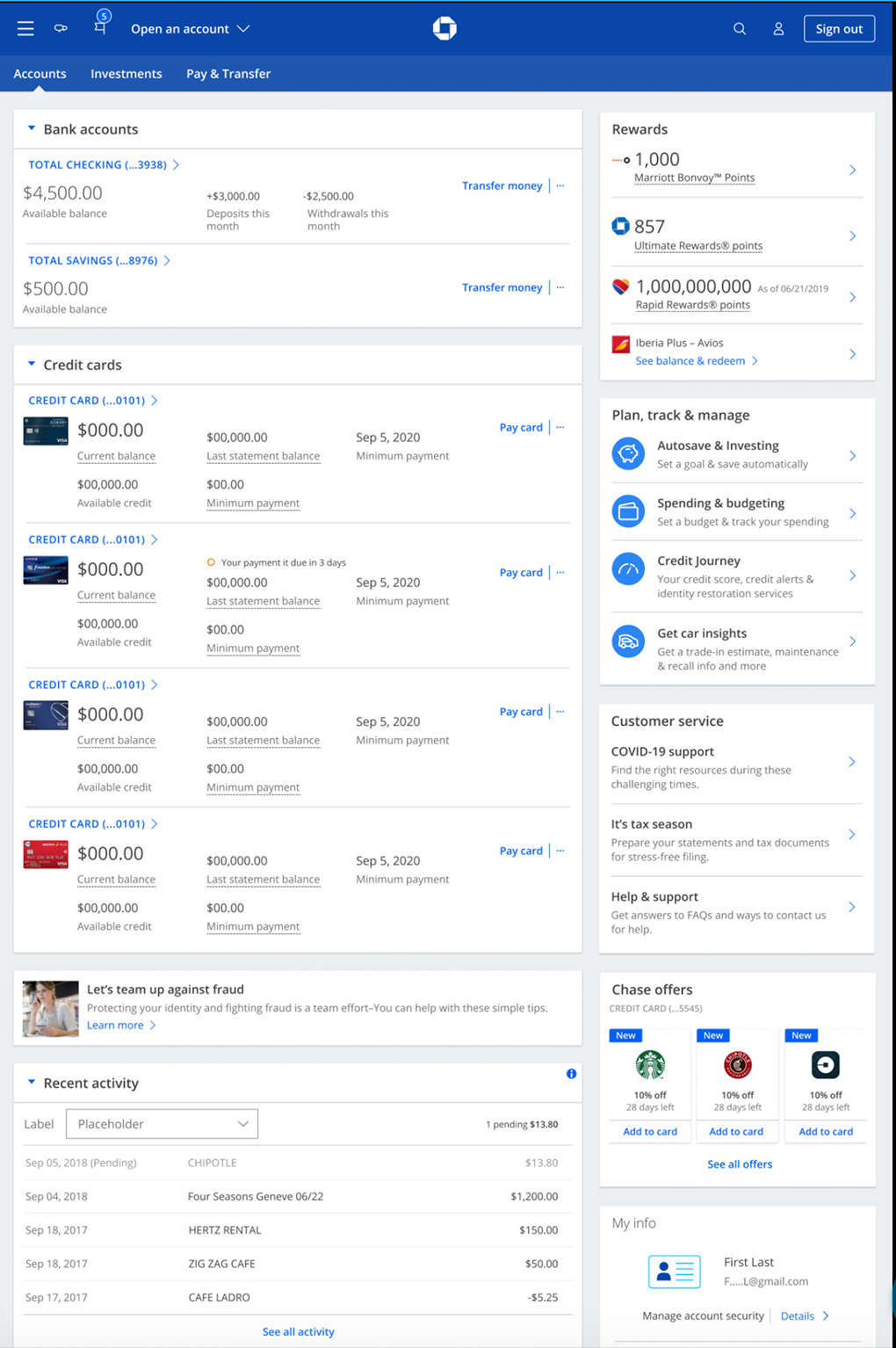
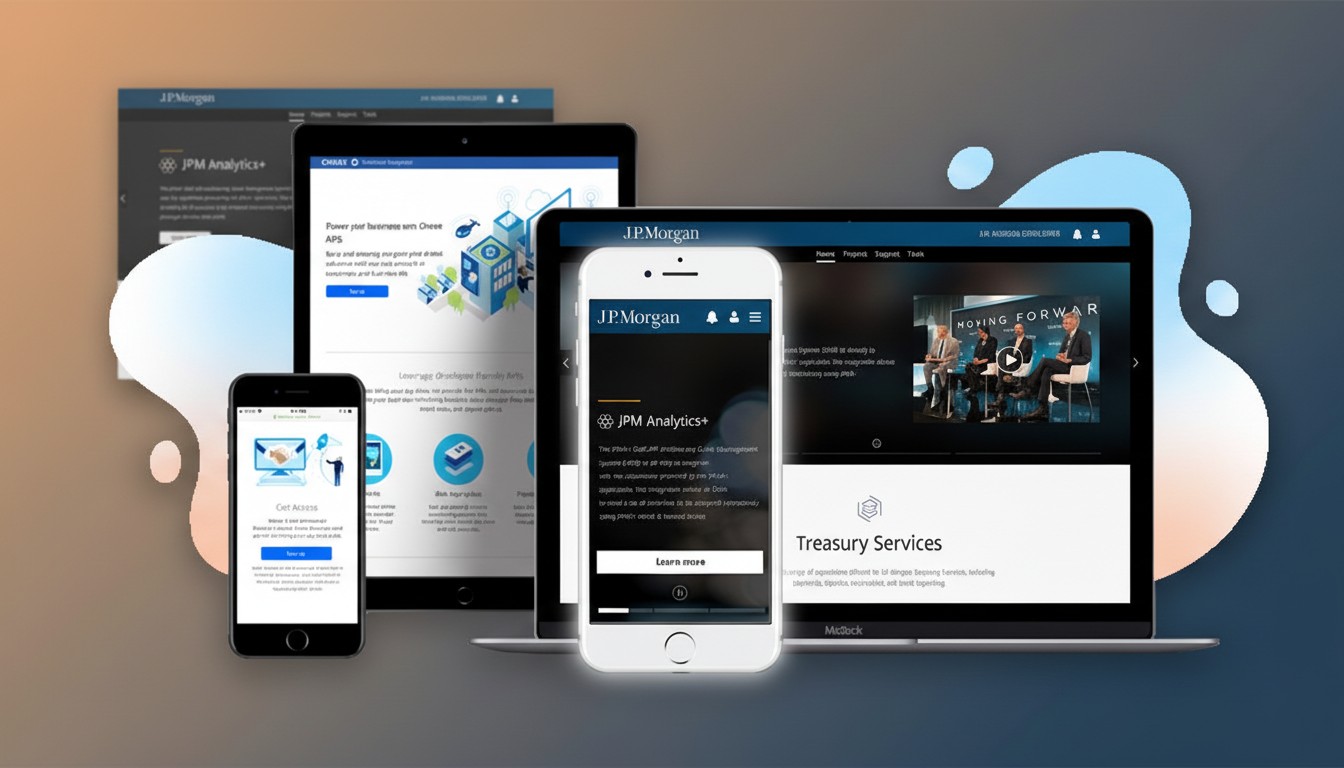
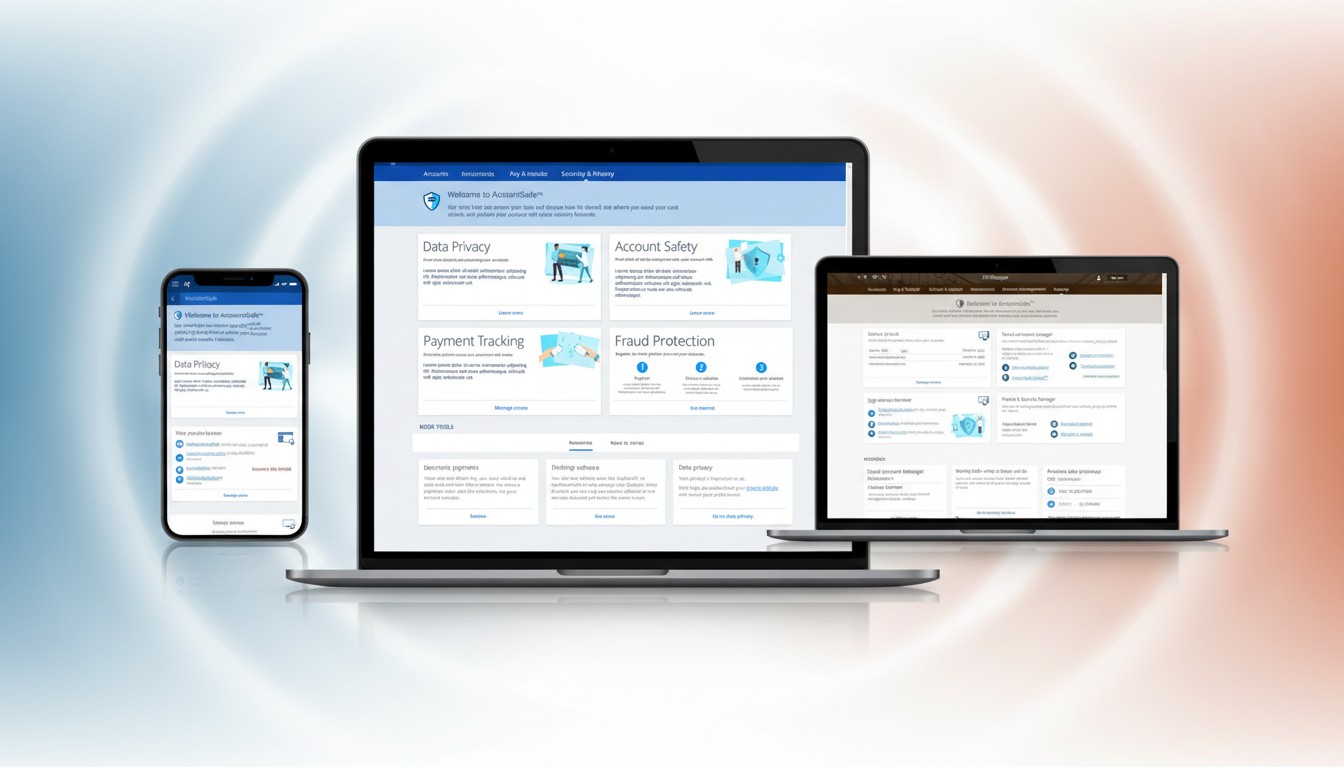
An early backbone. Organizing and prioritizing the features and ingresses on a shared page — leaning the hierarchy toward what the customer needs, not always what the business partners preferred — was, before mature governance existed, the seed of the Digital Channels governance I later stood up and carried into Security Center, Help & Support, and COVID relief.
Deep dive · password-protected
The platform foundations & the CBO design work, in full
The infoNet platform roots — IA at scale, card sorting, role-based dashboards, and the branded framework I built — and the CBO artifacts (service plans, accounts summary, dashboard, personas) with the decision behind each.
Results
The result — proven, then promoted
The dashboard and accounts work became a system adopted across Chase’s lines of business, and the display-priority work matured into formal governance. That body of work earned me my own line of business — Head of UX, Merchant Services — the first of the promotions that followed as the org kept growing. (The arc above traces where it went.)
A system, not a page
Dashboards & hubs adopted as a pattern across lines of business
Built it myself
Delivered clean, interactive front-end code across several products — until leading at scale pulled me out of the weeds
Earned my own LOB
The CBO process work led to Head of UX, Merchant Services — and expansions from there
A delivery track record
Known for the scoping, estimation, and strategy-to-delivery frameworks I built — and still run
Related case studies
Each of these is its own case — and each traces back to the front door, the dashboard system, and the practice built here.